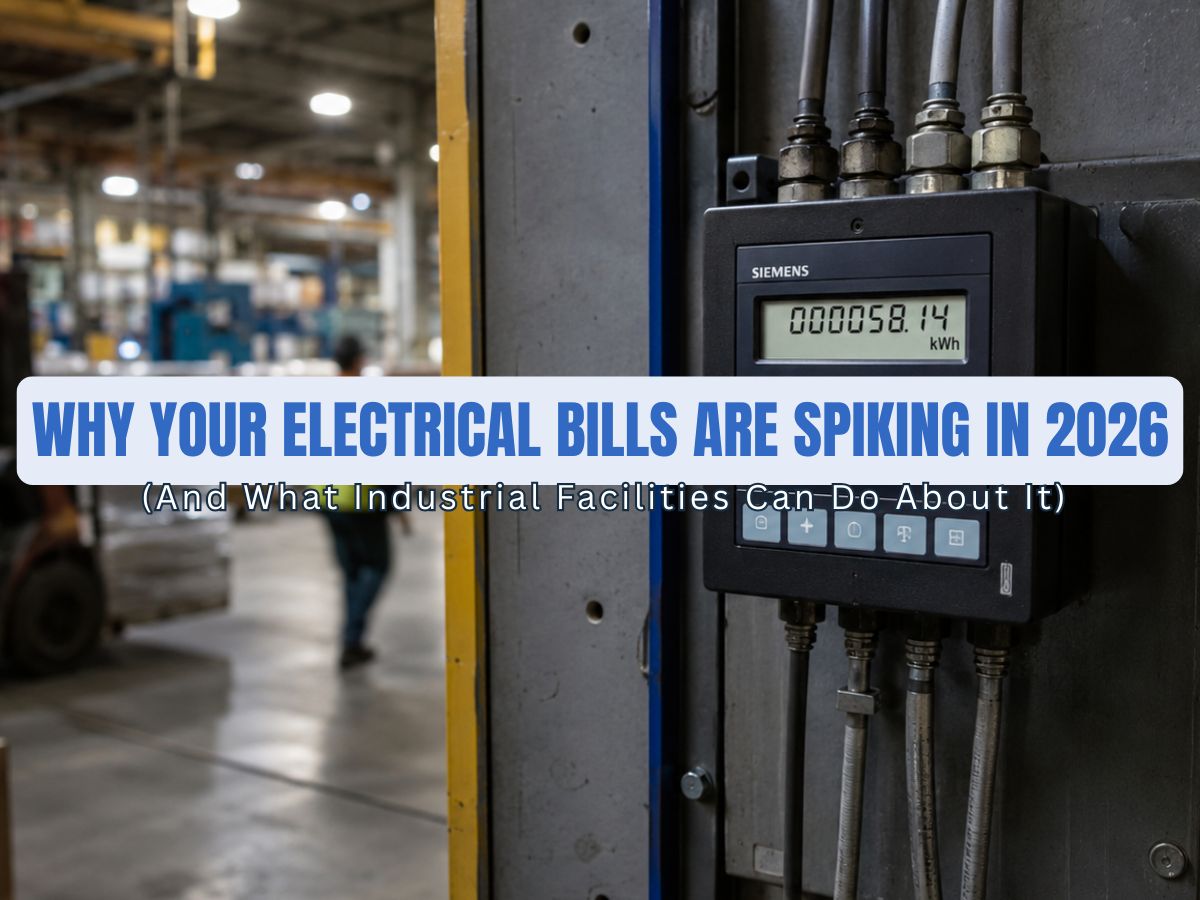
If you’ve opened your facility’s electric bill in the last few months and felt a little punch in the gut, you’re not alone. Industrial and commercial operations across the country are watching their power costs climb in ways that don’t add up to “just inflation.” Some manufacturers are reporting 20–30% jumps. Cold storage operators are watching margins evaporate. Distribution centers running 24/7 are quietly reworking their budgets mid-year. And the worst part? Most facility managers don’t have a clear answer for why or what to actually do about it.
So let’s break it down. Here’s what’s really happening with industrial electricity costs in 2026, why it’s likely getting worse before it gets better, and the practical moves smart facility operators are making right now.
First, the part nobody’s saying out loud: it’s not your imagination
The numbers tell the story. The average U.S. electricity bill hit $189 in 2025, a sharp jump from prior years. And it’s not just residential customers feeling it. A J.D. Power survey found that 22% of utility customers couldn’t pay their full bill or had an outstanding balance heading into 2026. For commercial and industrial customers, the math gets uglier fast. Where a homeowner might see a $50 monthly increase, a 50,000-square-foot manufacturing facility can be looking at thousands more in monthly utility costs, money that comes straight out of operating margins. And the trend is accelerating, not slowing down.
What’s actually driving the spike
1. AI data centers are eating the grid
This is the big one, and nobody’s talking about it enough at the facility level. According to a January 2026 Bloom Energy report, U.S. data center electricity demand is projected to nearly double between 2025 and 2028, jumping from roughly 80 gigawatts to about 150 gigawatts. To put that in perspective, that’s the equivalent of adding the power demand of several major cities to the grid in just three years. Goldman Sachs Research forecasts global data center power demand will rise about 50% by 2027 and as much as 165% by the end of the decade. The AI buildout is real, it’s happening fast, and the U.S. grid is straining to keep up. Here’s why that matters for your facility: when overall demand on the grid rises faster than supply, two things happen: Wholesale electricity prices climb and Utilities pass those costs through to all customers, including yours. A recent J.D. Power report found that 16% of customers already believe AI data centers are contributing to their higher bills. They’re not wrong.
2. Aging infrastructure can’t keep up
While demand surges, the physical grid that delivers that power is showing its age. Lead times for critical equipment like transformers, switchgear, and large breakers have stretched to multiple years. According to Deloitte’s 2026 Power and Utilities Outlook, utilities are facing equipment shortages that delay grid upgrades, which means less capacity gets added even as demand keeps climbing. This is part of why outages are also up. The EIA reported that U.S. electricity customers experienced an average of 11 hours of power interruptions in 2024 nearly triple the four-hour average from 2014 through 2023. Every one of those outages costs your facility money in lost production, spoiled inventory, and equipment damage.
3. Your industrial equipment got more sensitive
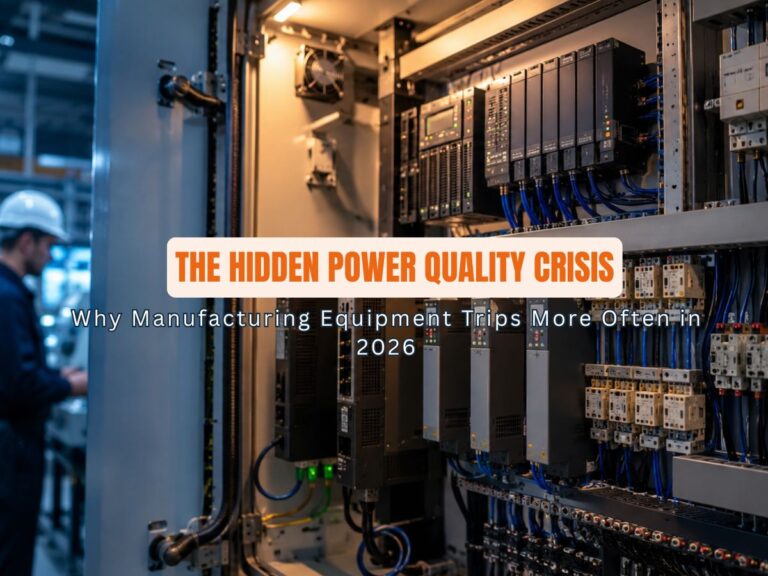
Modern manufacturing and processing equipment is more sensitive to power quality issues than ever before. Equipment that comfortably absorbed a 15% voltage dip a decade ago now trips offline at a 10% dip. So you’ve got a grid that’s becoming less stable at the exact moment your production equipment has become less tolerant of instability. As a result, more nuisance trips, more downtime, more wear on motors and drives and more dollars hitting your bill from wasted energy and repair labor that nobody wants to talk about.
What this means for your facility specifically
The impact looks different depending on what kind of operation you’re running:
- For warehousing and logistics facilities, the biggest hit comes from lighting and conveyor systems running long hours. A 24/7 distribution center can easily see five-figure monthly increases when rates climb just a few cents per kWh.
- For manufacturing plants, the pain points double up. You’re paying more for the power itself, AND your sensitive production equipment is taking more hits from voltage sags caused by grid stress. Every trip is lost production — and most facilities aren’t accounting for that hidden cost in their utility analysis.
- For food and beverage operations, the stakes are even higher. Refrigeration loads are non-negotiable, the cold chain can’t break, and rising electricity costs hit cold storage especially hard since refrigeration represents such a significant share of total energy use.
But it’s not all doom. The good news is that there are real, actionable moves you can make right now to push back.
Five things you can actually do in order of ROI
1. Start with an honest energy audit
Not the free utility company walkthrough where someone hands you a flyer about turning off lights. A real industrial energy audit looks at your actual usage patterns, identifies your top three power-hungry systems, benchmarks your kWh per square foot against industry norms, and surfaces specific upgrade targets. This is the foundation everything else builds on. Without it, you’re guessing.
2. Address the lighting first
If your facility still runs metal halide, fluorescent, or older HID lighting, this is where the biggest savings hide. LED retrofits typically cut lighting electricity consumption by 50–70%, qualify for utility rebates, and pay back in 18–36 months in industrial settings. A proper LED retrofit at a warehouse lighting installation saves more than you’d think, not just in kWh, but in maintenance savings (LEDs don’t need replacement every 18 months like fluorescents do) and reduced HVAC load (LEDs generate dramatically less heat). For more on this specific angle, check out our deeper breakdown on energy-efficient solutions.
3. Address power quality before it costs you a production line
Here’s a hidden cost most facility managers don’t budget for: poor power factor and harmonic distortion. Both quietly drive up your bills, increase demand charges, and damage sensitive equipment. Power factor correction capacitors, harmonic filters on VFDs, and smart monitoring of three-phase loads can cut 5–15% off industrial bills and protect the equipment behind those bills. This is especially true in manufacturing environments running multiple motors, drives, and automated systems. If you’re seeing more breaker trips or equipment failures than you used to, power quality is often the culprit. Our manufacturing services page walks through how we approach this for plants running production lines.
4. Backup power that actually pays you back
Backup generation isn’t just disaster preparedness anymore. Modern generators paired with smart switching and battery storage can save you money during peak demand periods, your facility “islands” off the grid during the most expensive hours of the day, runs on cheaper backup power, and reduces your utility demand charges. This is becoming standard practice in operations where 24/7 uptime matters. Cold storage facilities, manufacturing plants with critical processes, and any operation where five minutes of downtime costs five figures, these are the obvious candidates. We covered this in more detail in our post on why backup generators matter more than you think.
5. Start planning for behind-the-meter generation
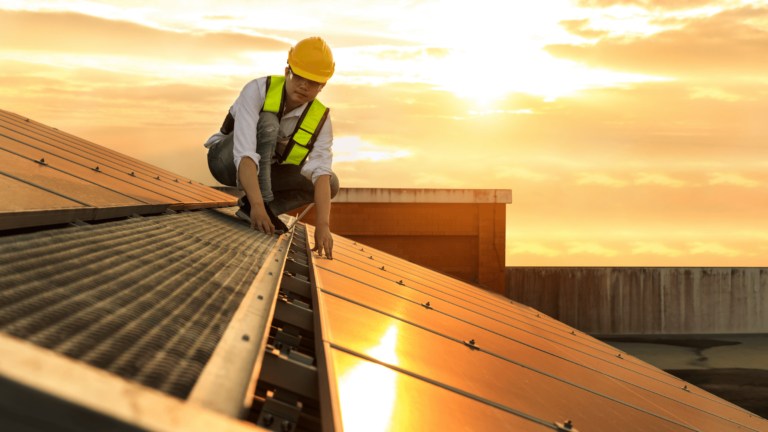
Microgrids, on-site solar with battery storage, and behind-the-meter power generation are no longer just for tech giants. The economics are shifting fast. Distributed Energy Resources (DERs), the broad category that includes microgrids, behind-the-meter solar, battery storage, and similar setups, is one of the fastest-growing segments of the electrical industry. The global DER market is projected to double by 2027. This doesn’t mean you need to break ground tomorrow. But you should be thinking about it now. Where would solar panels go? Is your roof structure ready? Could battery storage fit into your existing electrical room? These conversations should start today, even if implementation is two or three years out.
The bottom line
Rising electricity costs aren’t going to fix themselves. The pressures driving them, like AI data center demand, aging grid infrastructure, and equipment supply constraints, are structural, not temporary. Expecting bills to “go back to normal” is a bad bet for facility planning. But there’s also a real opportunity here. The contractors and consultants who understand how this is unfolding are helping their clients get ahead of it and those facilities are saving real money while their competitors get squeezed. The facilities that come out of 2026 in good shape will be the ones that:
- Got specific about understanding their current usage patterns
- Made the obvious upgrades (lighting, power factor, smart monitoring) before they became urgent
- Planned for power quality issues before they cost production
- Started thinking seriously about on-site power generation
Don’t wait for next month’s bill
If your electrical costs jumped in 2026 and you’re not sure why or you suspect there’s room to fight back but don’t know where to start, that’s the conversation we’re built for. Conveyor Electrical Services works with manufacturers, warehouses, distribution centers, and food & beverage facilities to identify hidden cost drivers, plan smart upgrades, and build electrical infrastructure that holds up to whatever’s coming next. Whether you need an industrial energy audit, a warehouse lighting retrofit, a code compliance review, or just a smart second opinion on a contractor’s quote, we’re here.
Request a Site Assessment or call us at 256-403-2218 to start the conversation.