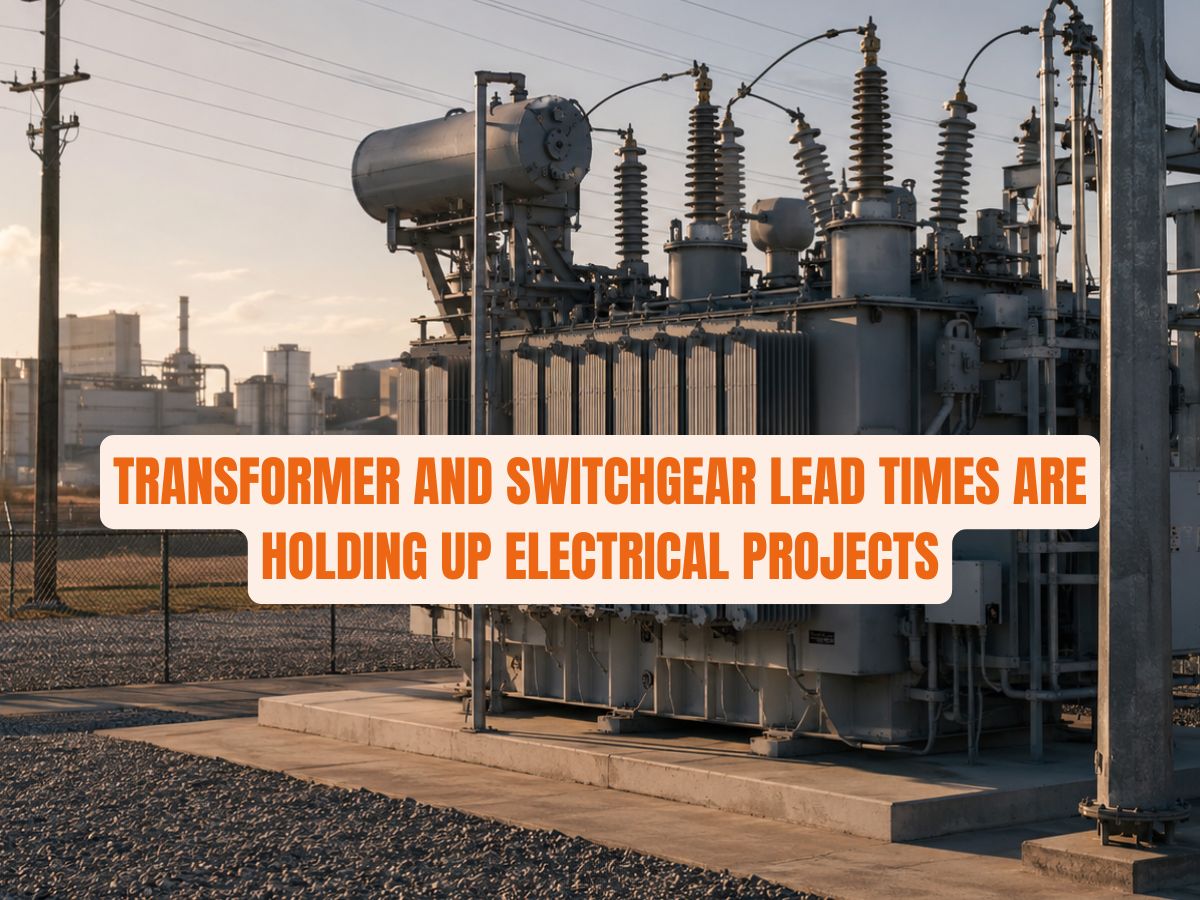
Imagine this: you just got approval for a $4 million expansion of your manufacturing plant. New production line, additional 800 amp service entrance, the works. You bring in your electrical contractor to start spec’ing the work, they price it out, you sign the contract and then they call you back two days later with the bad news. “The transformer is 36 months out. Maybe 30 if we get lucky.” Three years. To get a transformer. For a project you wanted operational in six months.
If this sounds familiar or if it terrifies you because you haven’t hit this wall yet you need to read the rest of this post. The transformer and switchgear shortage that started during the pandemic isn’t easing up. In fact, for many specifications, it’s getting worse. And the facility managers who plan around it are going to be the ones whose projects get built. The ones who don’t are going to be stuck explaining to executives why everything is delayed. Let’s talk about what’s happening, why it’s not going away, and what you can actually do about it.
This isn’t going away anytime soon
Let’s start with the bad news. Lead times for industrial-grade transformers and switchgear, which used to run 12–20 weeks pre-pandemic, are now commonly quoted at:
- Distribution transformers (small): 12–24 months
- Medium-voltage transformers: 18–36 months
- Large power transformers: 36–60 months
- Switchgear: 18–30 months
- Specialty equipment (oversized, custom configurations): Even longer
These aren’t worst-case scenarios. These are the new normal. According to Deloitte’s 2026 Power and Utilities Outlook, equipment shortages are constraining utility grid upgrades — which means new orders are still coming in faster than the manufacturers can fulfill them. This problem is structural, not temporary. And it’s hitting facility managers, project engineers, and contractors at every level of the industry.
Why transformer and switchgear lead times exploded
1. Demand surged from multiple directions at once
This is the big one. AI data centers are pulling massive amounts of grid equipment to support their builds. Electrification like EV charging, electric heating, electric vehicles, building electrification is driving residential and commercial demand. Industrial expansion (including the manufacturing reshoring that took off in the past few years) is creating new factory builds that all need transformers. It’s not one buyer outbidding everyone else. It’s three different sectors all needing the same equipment from the same factories, all at the same time. And the factories can only run so many shifts.
2. The supply chain hangover never fully resolved
The pandemic created bottlenecks that never quite cleared. Grain-oriented electrical steel (GOES), the specialized steel that goes into transformer cores, has been in short supply for years. Most of it comes from a small number of global producers, and demand outstripped production capacity in 2021 and hasn’t fully recovered. Copper and aluminum costs have been volatile. Specialty insulation materials, bushings, tap changers, and other components have all seen their own supply issues. Each shortage compounds the others.
3. U.S. domestic manufacturing got hollowed out
For decades, transformer and switchgear manufacturing migrated overseas. Many U.S. factories closed. The skilled workforce that ran them retired or moved to other industries. When demand spiked in 2021–2023, there simply wasn’t enough domestic capacity to absorb it. There’s effort now to rebuild U.S. transformer manufacturing like federal funding, new factory builds, workforce training programs. But none of that produces transformers in 2026. Those facilities won’t be at full output until 2028 or beyond.
4. Specialty equipment got hit hardest
The longer lead times disproportionately affect custom or oversized equipment. If you need a transformer in a common size (500 kVA, 1000 kVA, standard secondary voltages, common configurations), you might find one in months. If you need 2500 kVA at an unusual primary voltage with specific harmonic mitigation features, plan for years. This matters because industrial facilities often need exactly the unusual equipment. Manufacturing plants, cold storage facilities, food processing operations, these aren’t standard commercial loads.
What this means for your facility
The downstream impact of all this hits facility managers and project owners in several specific ways:
- New construction is getting delayed. Greenfield manufacturing plants, new distribution centers, expansion buildings — all of them need transformers and switchgear, and many are sitting on hold waiting for equipment to arrive.
- Expansion projects are stuck. Want to add a new production line that needs more electrical capacity? Be prepared for the new service entrance equipment to be the longest pole in the tent.
- Service upgrades are blocked. Bringing in new equipment that needs more amperage than your current service can provide? Same problem.
- Emergency replacements are terrifying. If your existing service transformer fails from age, lightning or a fault, you may be looking at running on temporary or rented power for many months while waiting for a permanent replacement.
- Insurance and lender questions are getting harder. Lenders and insurers are starting to ask about backup capacity, equipment age, and contingency plans in ways they didn’t a few years ago.
Eight ways to plan around the delays
Here’s the playbook, roughly in order of which to think about first.
1. Start specifying way earlier than you think
If you have any project on the horizon that requires new transformers, switchgear, or major electrical equipment even tentatively start the design and specification process now. Not “when budget is approved.” Now. Specifying early gives you ordering options, lets you lock in pricing before steel and copper costs shift again, and keeps you in line ahead of competitors who are still in the “thinking about it” phase. The cost of specifying early is small. The cost of being 12 months late on a $5M project is massive.
2. Right-size strategically
Don’t oversize “just in case” bigger transformers have longer lead times. Don’t undersize either, since growth will force you to add capacity later (which is even harder now). Right-sizing requires real load analysis, honest growth projections, and clear conversations with your contractor about what makes sense. For some applications, oversizing for future growth used to be a reasonable hedge. With current lead times, it’s often smarter to size for today’s needs and plan for modular additions later.
3. Consider refurbished or remanufactured equipment
Properly refurbished transformers and switchgear, sourced from reputable remanufacturers, can be reliable, code-compliant, and available in months rather than years. For non-critical applications, this can be a real option and saves significant money compared to new equipment. The key is sourcing from a reputable remanufacturer with proper testing protocols. Your contractor should be able to help you evaluate refurb options.
4. Build a relationship with your contractor before you need them
This is the quiet truth nobody wants to admit. Contractors with established supplier relationships, inventory access, and industry connections can find equipment that random project owners can’t. Spec houses and electrical distributors prioritize their best customers. If your only relationship with an electrical contractor is “we call when we need a quote,” you’re at the back of the line. If you have an ongoing relationship, preventive maintenance contracts, repeat business, real partnership, you’re a priority customer. We covered some of this in our post on what to expect during a turnkey electrical installation, but the lead time crisis has made these relationships more strategic than ever.
5. Look at skid-mounted and modular alternatives
For some applications, prefabricated power equipment (skid-mounted unit substations, modular switchgear, factory-built power distribution centers) can come together faster than traditional designs. The components are similar, but the integration and lead times can be different. This isn’t right for every application, but it’s worth a real conversation with your contractor and design team.
6. Plan for staged commissioning
If your project absolutely cannot wait for a full equipment delivery, design it for staged commissioning. Get partial energization working with what you can source today. Plan for the final transformer or switchgear to be added later as a planned outage. This requires good design and clean documentation, but it can let you start operations months or years earlier than waiting for everything at once.
7. Consider behind-the-meter generation as a workaround
If your project is blocked by needing a service upgrade and the utility upgrade is the longest pole generating power on-site can let you sidestep the bottleneck entirely. We covered this strategy in detail in our post on behind-the-meter power, but the lead time crisis is one of the biggest reasons facilities are now exploring on-site generation. You’re not solving the transformer shortage. You’re routing around it.
8. Build a strategic spare parts inventory
For critical loads, talk to your contractor about what spare equipment makes sense to have on-hand. Critical breakers, contactors, bushings, controls — these are smaller items, but losing one can take down a facility just as effectively as losing a transformer. Better to have $50K in critical spares sitting in a warehouse than to be stuck waiting 18 months when something fails.
The painful question: what if it fails before you can replace it?
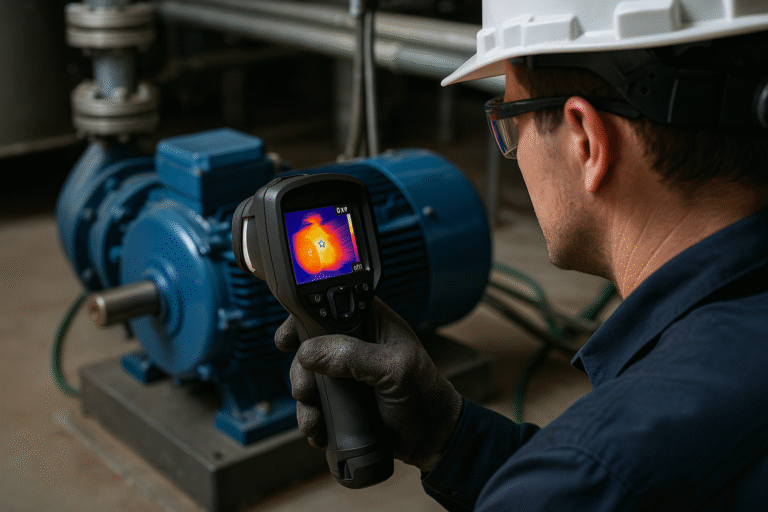
For most facilities, the honest answer is: significant disruption. Possibly months on temporary rental power. Possibly relocating critical operations. Possibly very large unbudgeted expense. Which is why preventive maintenance just became much more important than it used to be. Annual infrared thermography on transformers and switchgear. Regular oil testing on liquid-filled transformers. Predictive maintenance protocols that catch developing issues before they become failures. The cost of preventive maintenance has always been worth it. In 2026, with lead times the way they are, it’s no longer optional for any operation that can’t afford months of downtime. We covered the general framework in our post on preventative vs predictive maintenance, but the calculus has fundamentally shifted.
The bottom line
The transformer and switchgear shortage isn’t going to fix itself in 2026. Industry analysts are projecting that lead times won’t return to pre-pandemic levels until 2028 at the earliest and that’s an optimistic projection that assumes no new demand shocks. What this means for facility managers and project owners is that the old approach to electrical equipment planning call a contractor when you need a project, expect equipment to show up in months is broken. The new approach requires earlier planning, deeper relationships, more strategic thinking, and creative alternatives. The facilities that adapt to this reality will be the ones that get their projects built. The ones who don’t will be the ones explaining to executives why everything is delayed. This is solvable. It just requires planning further ahead than we used to.
Start the conversation before you need to
If you have a project on the horizon, any project that requires new electrical equipment, the time to start the conversation is now. Not when the budget is approved. Not when you’re ready to break ground. Now. Conveyor Electrical Services works with manufacturing, warehousing, and food & beverage facilities to plan ahead through the equipment shortage, source available alternatives, and design installations that work around the lead time crisis. Whether you need a project feasibility review, lead time assessment, refurbished equipment sourcing, or just a strategic conversation about what’s coming, we’re here.
Request a Project Planning Assessment or call us at 256-403-2218 to start the conversation.