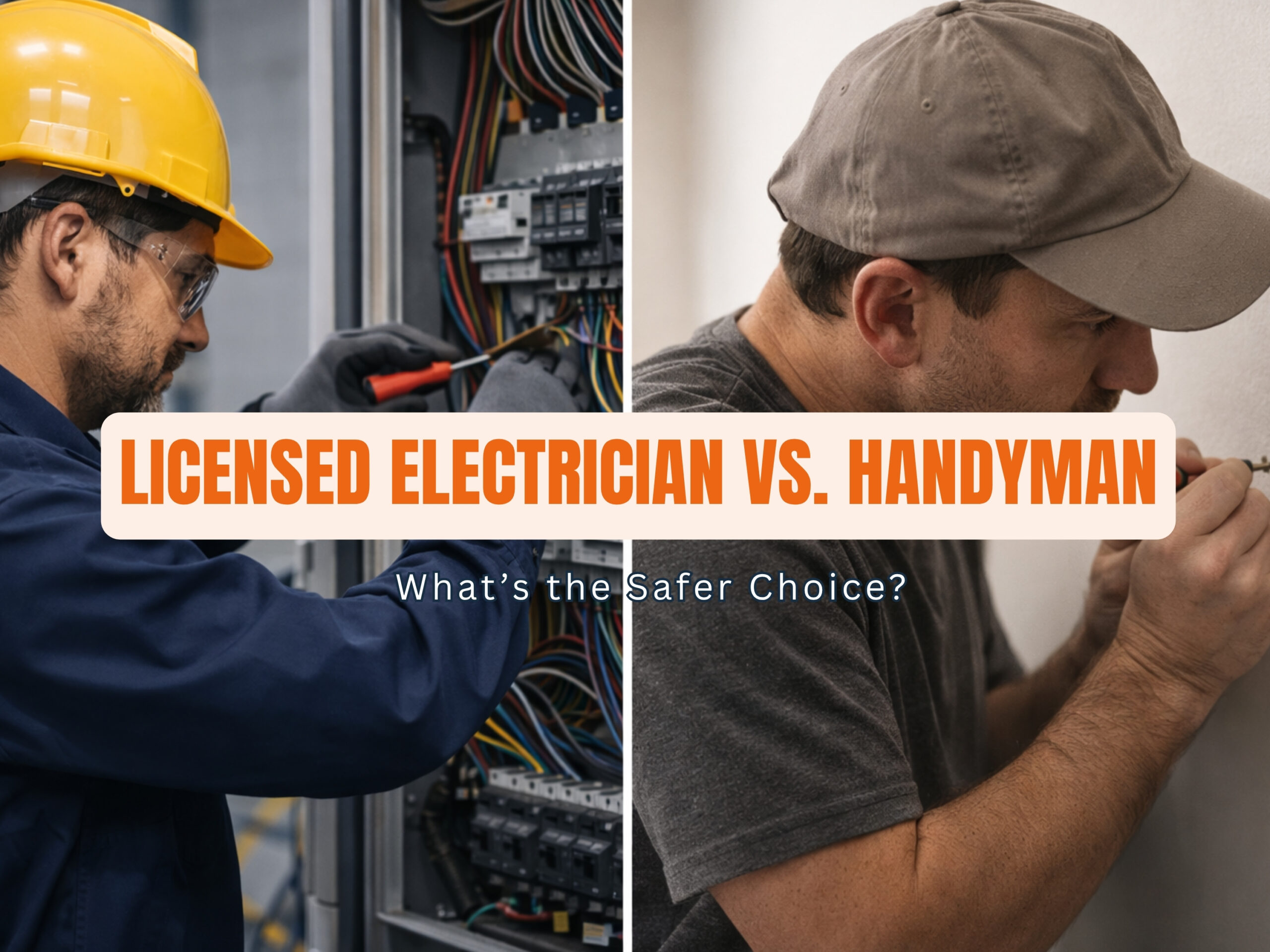
A lot of people look at small electrical jobs and think, “This should be simple enough.” Maybe it is a bad outlet, a flickering light, a ceiling fan installation, or a new switch that needs replacing. And when the job seems small, the next thought is usually, “Do I really need a licensed electrician for this, or can a handyman handle it?” That question comes up more often than people realize. The truth is, there are plenty of household tasks a good handyman can help with. But when it comes to electrical work, “good enough” is not always safe enough. Electrical systems are one of those parts of a home or building where the wrong fix can go unnoticed until it becomes a bigger problem. That is why it is important to understand the difference between a handyman and a licensed electrician, and why that difference matters more than many homeowners and property owners think.
What Is the Difference Between a Licensed Electrician and a Handyman?
At a glance, both may seem like they can help with repairs around a property. But they are not the same thing. A handyman is usually a general repair professional. They may handle minor home tasks like patching drywall, hanging doors, painting, replacing fixtures, or taking care of small maintenance items. Their work is often broad and practical. But a licensed electrician, on the other hand, is specifically trained to work on electrical systems. That includes wiring, panels, breakers, circuits, outlets, switches, lighting systems, troubleshooting, load calculations, and code-compliant installation methods. A licensed electrician has training focused on electrical safety, diagnosis, and standards that apply to that work.
That difference matters because when it comes to electrical work, power has to be distributed correctly, wiring needs to be protected, load needs to be appropriate, installations need to be up to code, and systems need to be safe now and later. For example, replacing a light fixture may seem simple. But if the box is not rated correctly, the wiring is damaged, the grounding is wrong, or the circuit is already overloaded, then the issue is bigger than just swapping one fixture for another.
Why Licensing Matters in Electrical Work
- Electrical work affects safety: Electrical mistakes can lead to shock hazards, overheated wires, burnt outlets, failed equipment, tripping breakers, and, in some cases, fire risk. The danger with electrical work is that a mistake can stay hidden behind a wall, inside a junction box, or at the panel until it becomes serious. A licensed electrician is trained to look beyond whether something “works” and focus on whether it is safe.
- Electrical work has to meet code: There is a reason electrical work is regulated more carefully than many other repair tasks. Electrical codes exist to protect people and property. A licensed electrician understands how to install and repair systems in a way that meets code requirements. A handyman may be experienced with general repairs, but that does not automatically mean they are trained in electrical code, load requirements, or permit-related issues.
- Proper diagnosis matters just as much as the repair: A lot of electrical problems are symptoms of something larger. A dead outlet may not just be a bad outlet. It could be a wiring issue, a tripped GFCI upstream, a loose connection, or a circuit problem. A flickering light may not just need a new bulb or switch. It could point to a failing connection, panel issue, or overloaded circuit. A licensed electrician is trained to diagnose the root issue, not just replace the visible part.
- Electrical systems are interconnected: One change in one part of the system can affect another. Adding a new outlet, installing a larger appliance, or extending wiring into another area is not just a local repair. It affects load, protection, and circuit performance. That is where electrical knowledge matters. A repair that seems isolated may actually involve a much larger system decision.
When a Handyman Might Seem Like the Easier Choice
To be fair, homeowners do not choose a handyman because they are trying to be reckless. Usually, they are trying to save time or money. They may already know someone who does general home repairs. They may think the job is small. Or they may not realize the electrical side of the project is more involved than it looks. That is understandable. If someone needs a shelf hung, trim replaced, or drywall patched after an electrical repair is done, a handyman may be a perfectly reasonable choice for that part of the work. The issue is when electrical repairs themselves are treated like just another minor home task. That is where people get into trouble.
Risks of Choosing the Wrong Person for Electrical Work
- The repair may solve the symptom, not the real problem: If a switch stops working and someone replaces the switch without figuring out why it failed in the first place, the deeper issue may still be there. Maybe the wiring connection was loose, or moisture got into the box, or the circuit is overloaded. A surface-level fix can make the issue look resolved while the real problem continues behind the scenes.
- Unsafe wiring may stay hidden: One of the hardest things about electrical mistakes is that they are often not visible once the cover plate goes back on or the fixture is installed. A splice may be loose. A wire may be improperly connected. A box may be overcrowded. Everything may appear normal on the surface, but the risk remains hidden.
- Improper work can create code violations: Even if something works, that does not mean it was installed properly. Code violations may not be obvious until an inspection, a home sale, or another electrician opens the wall later and finds the issue. At that point, the owner often has to pay to redo work that should have been done the first time correctly.
- Cheap work can become expensive work: A lot of people hire the cheaper option to save money, but electrical work is one of those areas where the cheapest fix can cost more later. If the work has to be corrected, troubleshooting becomes more complicated. If damage occurs to appliances, wiring, drywall, or equipment, the repair cost grows. What felt like a savings upfront can turn into a bigger bill later.
- Liability becomes a bigger concern: Electrical work that is done incorrectly can create issues beyond just the repair itself. If there is damage later, or if the work is found to be unsafe, the property owner is the one left dealing with the consequences. That is why it matters who is doing the work and whether they are qualified for it.
Jobs That Should Go to a Licensed Electrician
Some examples are worth being very clear about. If the job involves panel work, breakers, outlets, switches, new wiring, troubleshooting recurring issues, circuit additions, lighting installation, heavy appliances, electrical upgrades, EV chargers, backup power connections, or anything involving load calculations, that is electrician work. The same goes for work tied to renovations, home additions, garage conversions, kitchen upgrades, outdoor power, or older homes with aging wiring. For example, if someone adds a new freezer in the garage, installs a tankless water heater, or upgrades kitchen appliances, the job is not just about plugging in new equipment. It is about whether the circuit and panel can safely handle the added demand.
What If Cost Is a Concern?
When money is tight, the cheaper option can feel like the only realistic one. That is understandable. But if cost is a concern, the answer is not to ignore the issue or automatically go with the lowest price. The better move is to approach a licensed electrician with honesty and ask the right questions.
- Be upfront about your budget: A licensed electrician cannot always make the work cheaper, but they can often help you optimize your budget. If you let them know early that cost is a concern, the electrician can recommend options that fit your situation. You are not asking them to cut corners. You are asking them to help you make informed decisions within your budget.
- Ask what is urgent and what can be phased: Not every electrical issue has the same level of risk. Some things need immediate correction because they involve overheating, burning, or active safety hazards. Other items may be important but not critical that same day. Asking a licensed electrician to help you phase the work can make the cost feel more manageable. For example, if a panel upgrade is recommended, there may be other smaller corrections that can be done first while you plan for the larger project.
- Ask for the safest temporary path, not the cheapest shortcut: There is a difference between a phased plan and a risky shortcut. If full replacement or larger repairs are not possible right away, ask the electrician what the safest temporary approach is. That keeps the conversation focused on safety, not just price. A licensed electrician may be able to recommend a short-term fix that reduces risk while helping you plan for the full repair later.
- Ask for a clear explanation of the problem: It helps to understand exactly what you are paying for. Ask the electrician to explain what the problem is, why it matters, and what could happen if it is delayed. That way, you can make a more informed decision instead of feeling pressured into work you do not fully understand. A good electrician should be able to explain the issue in plain language.
- Compare value, not just price: The cheapest option is not always the least expensive in the long run. If the wrong person handles electrical work and the job has to be redone, corrected, or repaired after something goes wrong, that original “savings” disappears quickly. Paying for proper diagnosis and safe work upfront often protects you from higher costs later, especially when wiring, panels, breakers, or overloaded circuits are involved.
- Tackle preventive work before it becomes emergency work:
One of the best ways to manage cost is to deal with electrical concerns early, before they turn into urgent repairs. Emergency work is often more stressful, more disruptive, and more expensive because the problem has already escalated. A licensed electrician can help you identify smaller issues before they become bigger ones, which can save money over time. If you want to learn more about preventive maintenance, check out our blog.
Conclusion
There is nothing wrong with calling a handyman for general repairs around a property. But when the job involves electrical systems, wiring, circuits, panels, or troubleshooting, the safer choice is usually a licensed electrician. That is because electrical work, a repair that looks simple on the surface, can involve much more behind the walls, at the panel, or across the circuit than most people realize.
If you are dealing with an electrical issue in your home, office, warehouse, or commercial property, it is worth choosing a trained professional to handle the work correctly. Conveyor Electrical Services is a licensed electrical company that can help homeowners and businesses address electrical issues safely and professionally. Whether you need troubleshooting, repairs, upgrades, inspections, or electrical installation support, our team is here to make sure the work is done right.
Reach out to Conveyor Electrical Services today to schedule service and get peace of mind that your electrical system is in qualified hands.