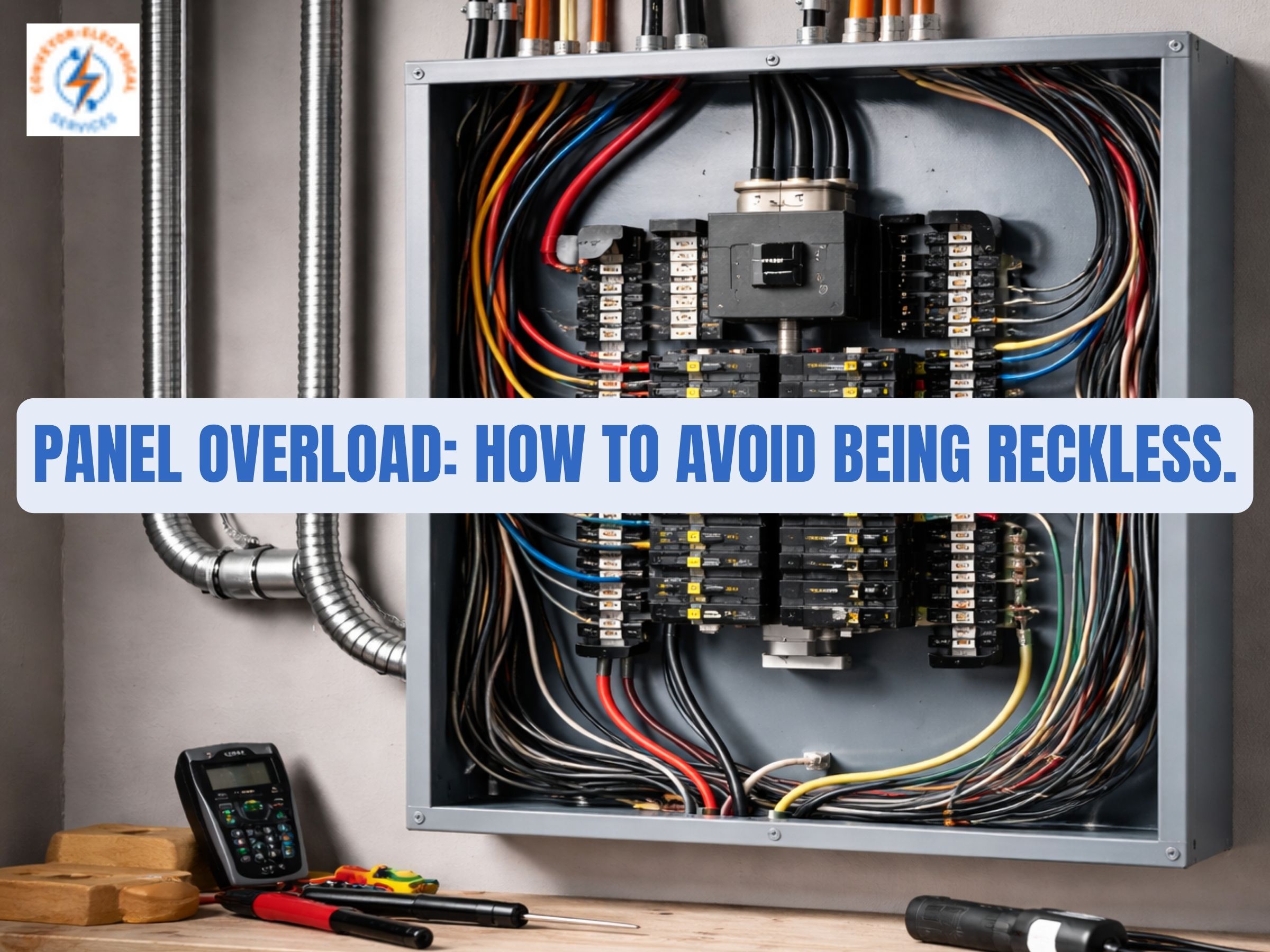
If you’ve ever seen a cramped breaker panel, whether in a busy warehouse or a cramped laundry room, you’ve probably thought: “We’re out of space… can’t we just add a sub-panel?”It’s a fair question. Homeowners, property managers, and even warehouse operators hear this all the time. And on the surface, it sounds like a smart, budget-friendly solution. Why replace a full electrical service when you can bolt on more space and keep things moving, right?
Well… yes and no.
Adding a sub-panel can be completely safe, code-compliant, and incredibly helpful when it’s done under the right conditions. But in many commercial and residential environments, sub-panels are used as a shortcut. And shortcuts in electrical systems are a fire risk, a code violation, and in commercial settings, a shutdown waiting to happen. So let’s walk through when adding a sub-panel actually makes sense and when it turns into a reckless cost-saving gamble that comes back to bite you.
Understanding the Basics: What a Sub-Panel Is (and Isn’t)
A subpanel is a secondary electrical distribution panel that draws power from your main service panel, allowing you to add more circuits when the primary panel is full. Property owners often choose sub-panels because they’re less expensive than a full service upgrade, provide flexibility for new rooms or equipment, help organize electrical loads more efficiently, and reduce overcrowding inside the main panel. On their own, these reasons are perfectly valid. The problem arises when a sub-panel is added to a system where the main panel is already operating at or near its maximum capacity at that point, what seems like a practical solution can quickly become a serious safety risk. And this is where the trouble starts.
When Adding a Sub-Panel Is the Right Move
 1. You Have Capacity—Just Not Enough Spaces: In some cases, the electrical system itself isn’t the problem. The issue is physical space in the panel. The main panel may still have available capacity, but all breaker slots are already occupied. This is common in older homes that have gone through multiple remodels, commercial suites expanding office areas, shops adding small appliances or new lighting zones, and warehouses that need to separate equipment categories for easier maintenance. In these situations, adding a sub-panel is a reasonable and code-compliant solution, as long as load calculations confirm the system can support the additional circuits.
2. You’re Expanding to a Distant Part of the Building: When new electrical demand is far from the main panel, a sub-panel can be both practical and efficient. This often happens when warehouses add circuits on the opposite side of the facility, homes finish basements or build detached garages, or commercial kitchens expand refrigeration and prep areas. Running long, oversized circuits from the main panel can increase voltage drop, raise material costs, and complicate maintenance. Installing a sub-panel closer to the load reduces wire length, minimizes voltage loss, lowers the risk of overheated conductors, and makes future servicing far more manageable. In these cases, a sub-panel isn’t just acceptable, it’s the smarter design choice.
3. You’re Reorganizing Load Distribution for Safety: Sometimes the problem isn’t capacity or distance, but poor load organization. It’s common to see high-draw appliances clustered on the same section of a panel, HVAC equipment mixed with lighting circuits, or machinery loads that aren’t isolated for proper lockout during maintenance. Adding a sub-panel allows circuits to be grouped logically and safely, improving system clarity and performance. In commercial environments, especially, this approach enhances labeling, simplifies troubleshooting, supports OSHA compliance, and reduces downtime when maintenance or repairs are required.
When Installing a Sub-Panel Becomes Reckless
Here’s the part most people underestimate, especially during renovations or budget crunches.
 1. When You’re Using a Sub-Panel to Mask an Overloaded Service: This is the most common and dangerous mistake in both residential and commercial buildings. If your utility service is already operating near its limit, adding a sub-panel does not increase capacity, it simply redistributes an already strained load. The result is overheated feeder conductors, nuisance breaker tripping, insulation breakdown, increased fire risk within bus bars, and potential insurance liability. Warning signs often include lights dimming when large equipment starts, breakers tripping during normal use, panels that feel warm to the touch, buzzing or humming sounds, and visible scorching around lugs. In commercial facilities, where equipment draws higher continuous loads, these risks are amplified and can escalate quickly.
2. When the Building Has Unknown or Unsafe Existing Wiring: Installing a sub-panel does nothing to correct underlying wiring problems and can actually make them worse. Older or compromised electrical systems may already be operating under unsafe conditions, and adding new distribution points increases stress on those components. Common risk factors include aluminum branch wiring, unbonded or improperly grounded systems, shared neutral circuits, recalled panels such as Zinsco or Federal Pacific, and undocumented DIY electrical work. Adding a sub-panel in these scenarios is like installing new tires on a vehicle with a cracked frame. It may look like an upgrade, but the system remains fundamentally unsafe.
3. When the Feeder Cable Can’t Support the Increased Load: A sub-panel is only as safe as the conductors feeding it. If the feeder cable is undersized or improperly rated for the additional circuits and simultaneous equipment loads, serious problems can develop. These include conductor overheating, excessive voltage drop, nuisance breaker tripping, burnt lugs, and melted insulation. In commercial and industrial environments, the risk is even higher because motors, compressors, and automated equipment often draw significant inrush current during startup, placing sudden stress on inadequately sized feeders.
4. When You’re Trying to Avoid a Full Service Upgrade (But Really Need One): This scenario occurs more often than most people realize, especially during renovations or budget constraints. While a full electrical service upgrade can be costly, typically ranging from $2,000 to $6,000 for residential buildings and $8,000 to $50,000 or more for commercial properties, using a sub-panel to avoid that upgrade is not a shortcut if load calculations show the service is already near capacity. In those cases, adding a sub-panel becomes a code violation. In commercial settings, this can lead to failed inspections, operational shutdowns, voided insurance claims, and legal liability if an electrical failure causes injury. In residential properties, it can complicate home sales, invalidate disclosures, and increase insurance premiums.
The Cost Pressure Problem: The Big Reason This Issue Keeps Coming Up
Electricians face this battle every week: “Why can’t you just add a sub-panel? We don’t want to spend money on an upgrade right now.” And while adding a sub-panel may seem cheaper in the moment, it often becomes far more expensive in the long run if the electrical system wasn’t designed to support it. In residential settings, homeowners want affordability, quick fixes, and the ability to run new appliances, EV chargers, hot tubs, or home offices without major rewiring. In commercial environments, the pressure comes from a different place, business owners want minimal downtime, fast expansion for new equipment or automation, and ways to reroute circuits without triggering utility shutdowns or inspections. The result is constant pressure on electricians to “just add a sub-panel.” But budget constraints don’t change electrical capacity, and neither the National Electrical Code nor the laws of physics make exceptions for convenience.
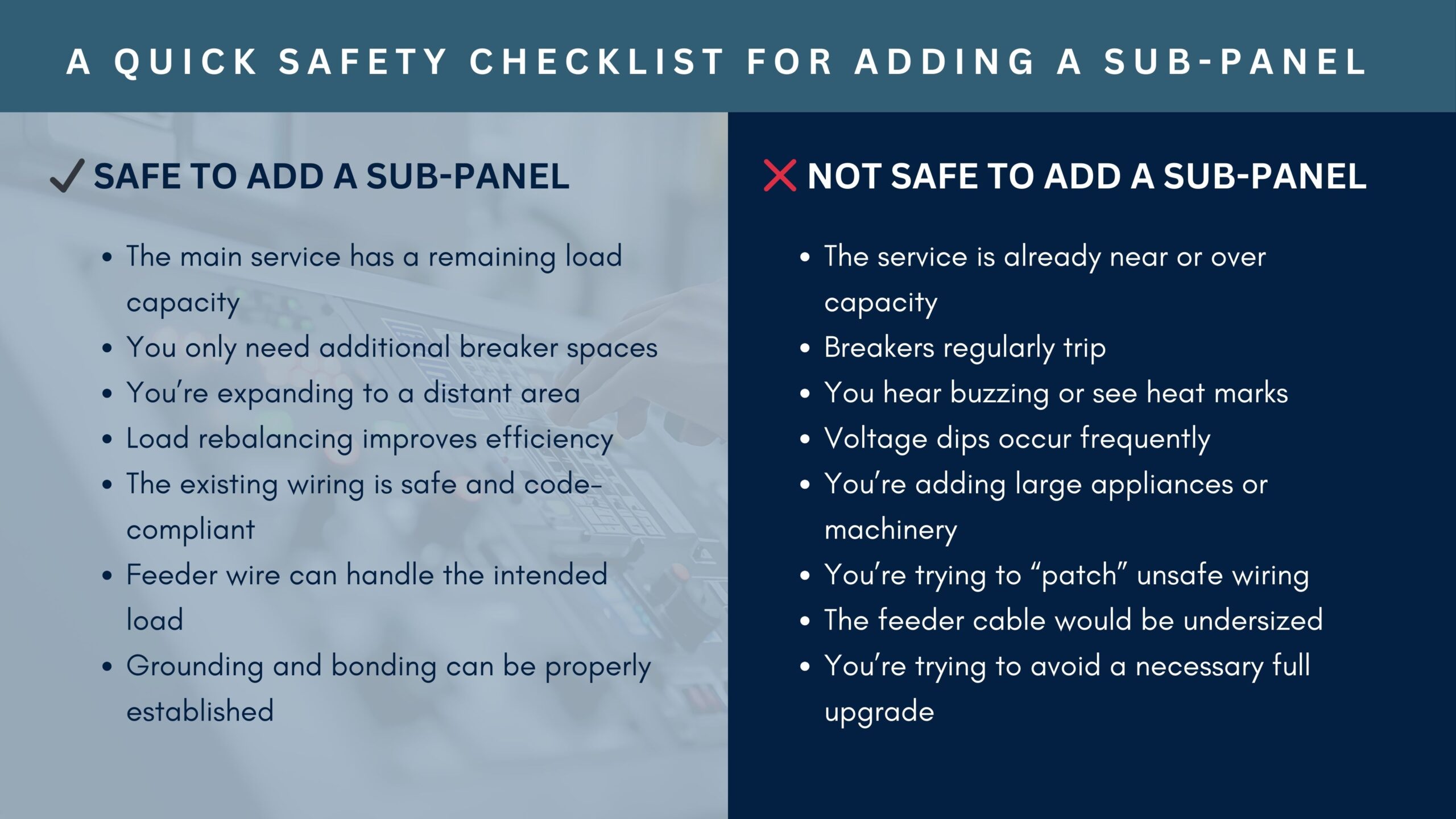
How to Tell If Adding a Sub-Panel Is Safe: A Quick Checklist