The Growing Gap Between Code and Modern Operations
Electrical codes exist for a reason: to protect people, property, and systems from preventable harm. No reputable electrician, engineer, or facility manager would argue otherwise. The National Electrical Code (NEC), OSHA standards, and local amendments have saved countless lives and prevented catastrophic losses over decades. But as technology, building use, and operational demands evolve, a difficult question is surfacing more often in commercial and industrial environments: When does strict code compliance stop improving safety and start hurting productivity?
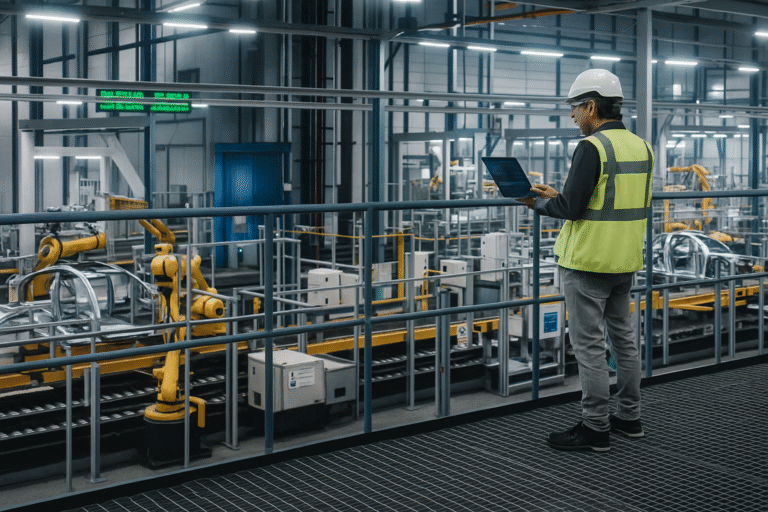
This isn’t a call to ignore regulations. It’s a call to examine how rigid, outdated, or one-size-fits-all interpretations of electrical codes can unintentionally slow projects, inflate costs, and create inefficiencies that don’t meaningfully improve safety. Most electrical codes are written to be broadly applicable across countless building types, industries, and risk profiles. That universality is both their strength and their weakness. A logistics warehouse operating 24/7 with automated conveyor systems, redundant safety controls, and real-time monitoring does not carry the same risk profile as a small retail space or an aging commercial office. Yet in many jurisdictions, both are subject to nearly identical electrical requirements. As a result, modern facilities often face:
- Mandatory shutdowns for minor upgrades
- Redundant disconnects in already safeguarded systems
- Spatial clearance rules written for outdated equipment
- Inspection delays that halt time-sensitive projects
The intent behind these rules is sound. The execution, however, sometimes fails to reflect how far electrical technology has advanced.
Where Codes Can Create Friction Without Added Safety
- Overly Conservative Shutdown Requirements: In many commercial retrofits, even minor electrical changes can trigger full or partial shutdowns. For facilities running continuous operations, distribution centers, cold storage, manufacturing plants, this can mean lost revenue, missed shipping deadlines, and idle labor. In some cases, modern systems with redundancy, arc-fault protection, and remote isolation are still required to shut down entirely, even when the work could be performed safely under controlled conditions. The result isn’t increased safety, it’s operational disruption.
- Legacy Rules Applied to Modern Equipment: Some clearance, spacing, and access requirements were written decades ago for large, manually serviced equipment. Yet inspectors may still apply rules intended for older switchgear, forcing redesigns, relocations, or costly structural changes that add little real-world benefit. Today’s electrical systems are often:
- More compact
- Digitally monitored
- Designed for front-access maintenance
- Equipped with internal fault containment
- Redundancy Without Risk Differentiation: Electrical codes frequently assume worst-case scenarios. While this is appropriate in many settings, it becomes problematic when low-risk, highly controlled environments are treated the same as high-risk ones. For example, requiring identical protection schemes for both intermittent-use panels and continuously monitored automation systems can lead to:
- Overengineering
- Increased material costs
- Longer installation timelines
- Higher maintenance complexity
Safety improves when protections are appropriate, not merely additive.
The Cost of Over-Compliance in Commercial Projects
Over-compliance in commercial electrical projects doesn’t just slow progress, it carries real, measurable financial consequences. Inspection backlogs and forced redesigns can delay project timelines, while mandatory shutdowns lead to lost productivity and operational disruptions. At the same time, businesses often face increased capital costs from installing unnecessary infrastructure and reduced system flexibility that limits future expansion. Ironically, these pressures can push owners to seek shortcuts in other areas, increasing risk in ways the electrical code was never intended to address.
Why Inspectors and Electricians Are Caught in the Middle
This debate isn’t “electricians vs. inspectors.” In reality, both are constrained by the same system. Inspectors are obligated to enforce the code as written. Electricians are obligated to build systems that pass inspection. Neither group has unilateral authority to reinterpret intent, even when common sense suggests a safer, more efficient alternative. The real issue lies upstream: Codes often evolve more slowly than the technology they govern.
When Compliance and Common Sense Actually Align
To be clear, many electrical codes absolutely improve productivity by preventing failures before they happen. Proper grounding and bonding, accurate load calculations, arc-flash mitigation, and clear system labeling all save time, money, and lives over the long term. Problems arise when rules are applied without context, risk is assumed rather than properly assessed, or innovation outpaces regulation. For example, a modern warehouse with automated conveyor systems, redundant safety interlocks, and real-time monitoring may still be required to shut down an entire electrical zone to perform a minor modification—despite the work being isolated and safely controllable. In cases like this, the code’s intent is safety, but the outcome is unnecessary downtime and lost productivity. The goal isn’t less compliance, it’s smarter compliance that aligns safety requirements with modern electrical systems and real-world operating conditions.
What Smarter Compliance Looks Like
Forward-thinking electrical design and installation teams increasingly focus on:
- Risk-based evaluations rather than blanket assumptions
- Documentation that demonstrates equivalent or superior safety
- Early collaboration with inspectors and AHJs
- Designing systems that exceed intent, even if they differ in form
In many jurisdictions, codes already allow for alternative methods if equal or greater safety can be demonstrated. The challenge is that these pathways are underused, often due to time pressure or lack of coordination.
Residential vs. Commercial: Why the Impact Is Different
In residential settings, overly strict codes typically result in higher costs or delayed renovations. In commercial environments, the impact is far more significant. A delayed inspection in a home remodel is inconvenient. A delayed inspection in a warehouse can shut down operations, disrupt supply chains, and affect dozens or hundreds of workers. This is why commercial electrical work demands a deeper understanding of both code compliance and operational reality.
The Future: Codes Must Evolve With the Grid
By 2026, electrical systems will be even more complex, driven by rapid shifts in how power is generated, managed, and consumed. Facilities will increasingly rely on:
- EV charging infrastructure at scale
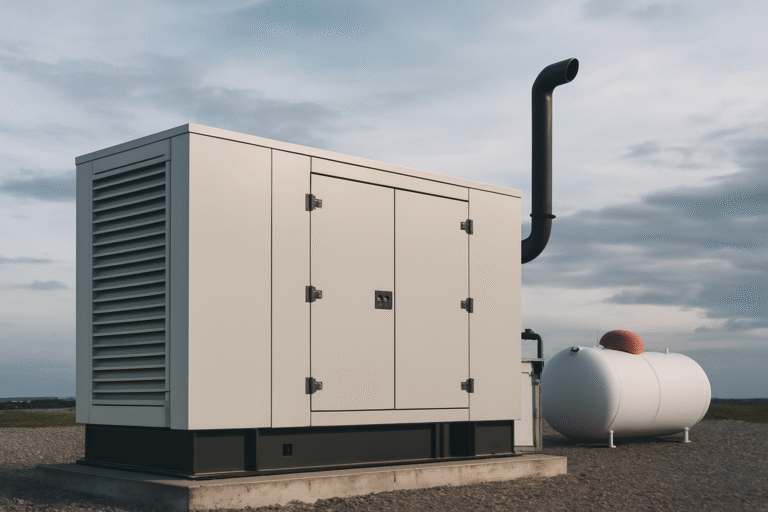
- On-site generation and energy storage systems
- Smart panels with AI-driven controls
- Advanced automation and robotics
- Load-balancing and demand-response systems
- Power quality monitoring
- Predictive maintenance analytics
- Integrated building management systems
- Hybrid AC/DC power environments.
Codes that fail to adapt to these realities risk becoming obstacles rather than safeguards. The industry doesn’t need fewer rules; it needs rules that accurately reflect how electricity is generated, distributed, monitored, and controlled in modern facilities today.
Final Thought: Safety and Productivity Are Not Opposites
Electrical safety and operational efficiency are not competing goals. When codes are applied thoughtfully and updated responsibly, they reinforce each other. The real challenge is recognizing when compliance has drifted away from intent. That’s where experienced electrical professionals add the most value: not by cutting corners, but by designing systems that are safe, compliant, and operationally sound. In the end, common sense isn’t the enemy of code compliance. It’s the lens that ensures compliance still serves its original purpose.
Modern electrical systems demand more than box-checking compliance. If you’re planning a retrofit, expansion, or automation upgrade, our team can evaluate your electrical design through both a code-compliant and operational lens. We help commercial facilities stay safe and efficient without unnecessary shutdowns or overengineering. 👉 Request a Commercial Electrical Assessment